Since 2005, POLYVA focuses on turnkey solution for water soluble film packaging machine.

Packaging Process
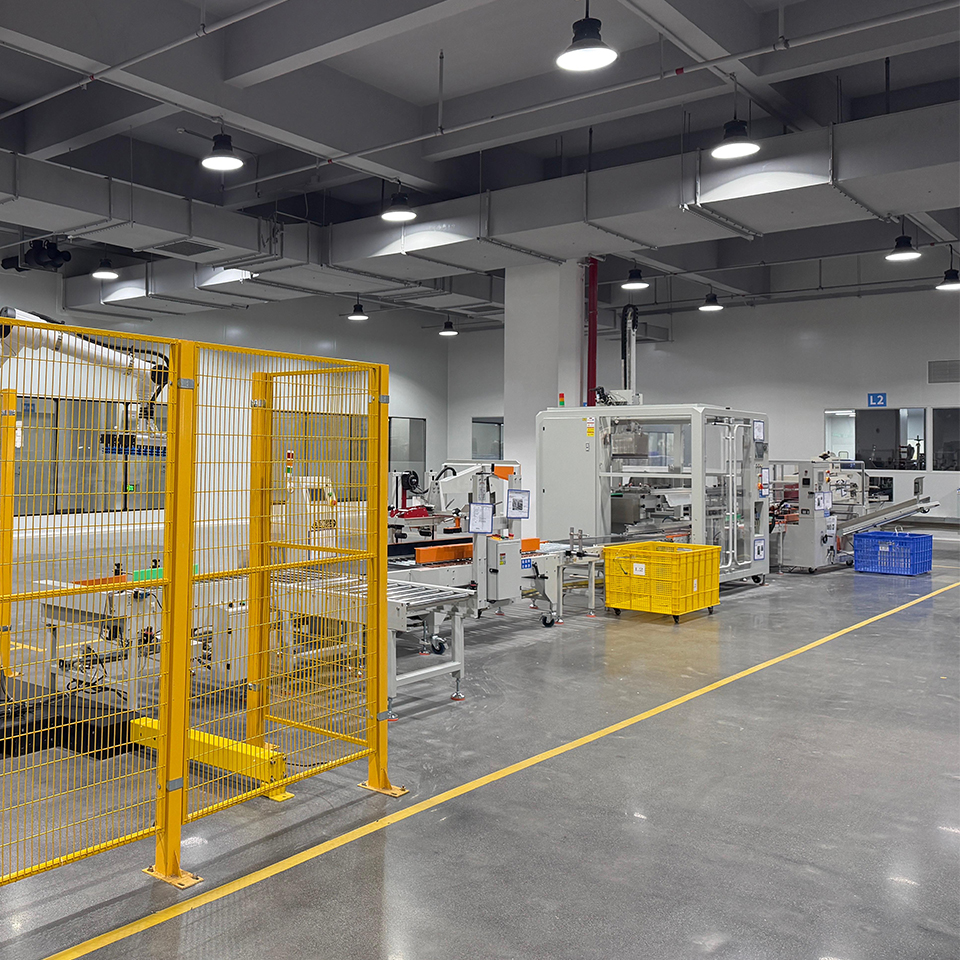
Water Soluble Film Packaging Process
Water soluble film packaging is a controlled process that converts PVA (polyvinyl alcohol) film into pre-measured, sealed water-soluble packages. Depending on the application, the process typically includes film feeding, forming, product filling, sealing, cutting, inspection, and secondary packaging. During film feeding, the film is guided into the packaging machine under controlled tension and alignment.
The forming system shapes the film into a pouch or predefined cavity, while a dosing system delivers the required quantity of liquid, powder, granules, or other compatible materials. The filled package is then sealed to create an enclosed unit and cut into individual packs. Inspection procedures help verify package appearance, dimensions, sealing quality, and other specified quality parameters. Finished packs can then be counted, collected, and transferred to secondary packaging equipment. Actual process configurations vary according to film properties, product characteristics, package design, and production targets. Proper coordination of film handling, dosing accuracy, sealing conditions, and environmental controls helps maintain consistent packaging quality and st
How Does Water Soluble Film Packaging Work?
The packaging machine first feeds and positions the water soluble film, then forms it into a pouch or predefined cavity. The product is accurately dosed into the formed package before the film is sealed. Individual packs are then cut, inspected, and transferred to secondary packaging when required.
PVA film acts as the packaging material and forms the pouch or cavity that contains the product.
Compatible liquids, powders, granules, or other materials are measured and delivered according to the required dosage.
The machine coordinates film feeding, forming, filling, sealing, and cutting to produce individual packages.
| Process | What Happens | Key Control |
| Film Feeding | Water soluble film enters the packaging system | Film tension & alignment |
| Forming | Film is shaped into cavities/pouches | Forming temperature & shape |
| Product Filling | Compatible liquids, powders, granules or other materials are accurately dosed into the formed package | Filling accuracy |
| Sealing | Film layers are bonded together to seal the package | Sealing temperature & pressure |
| Cutting | Individual packs are separated from the film | Cutting accuracy |
| Inspection | Finished packs are checked | Weight, appearance & sealing |
| Secondary Packaging | Primary packs are collected and transferred to secondary packaging | Counting & transfer |
Water-Soluble Film Packaging Process
Water-soluble PVA film is loaded onto the machine and fed forward at a controlled speed. Proper film tension and alignment help ensure stable operation.
The film is shaped into cavities using forming rollers or molds. Cavity size and depth are adjusted according to the product’s dimensions and filling volume.
Liquid, powder, or other formulated ingredients are accurately dosed into the film cavities. Precise filling helps maintain consistent product weight and quality.
A second layer of PVA film is applied and sealed to enclose the product. Controlled temperature, pressure, and sealing time help prevent leakage.
The sealed film is cut into individual pods or packages. Cutting precision helps maintain consistent product shape and clean edges.
Finished products are checked for leakage, sealing defects, shape consistency, and other quality issues. Automated inspection systems can help improve quality control.
Qualified products are counted and transferred into bags, boxes, or other packaging formats. Automated counting and packing equipment can improve efficiency and reduce manual handling.
What Factors Affect the Water Soluble Film Packaging Process?
Water Soluble Film Packaging Process by Product Type
| Product | Typical Packaging Considerations |
| Laundry Detergent | Liquid/powder dosing and accurate portion control |
| Dishwashing Detergent | Moisture protection and reliable sealing |
| Agrochemicals | Chemical compatibility and safe handling |
| Cleaning Chemicals | Liquid viscosity and dosage accuracy |
| Water Treatment Chemicals | Powder/granule filling and package integrity |
| Other Water-Soluble Products | Customized film, cavity and filling configuration |
FAQs About Water Soluble Film Packaging
1
What Is the Water-Soluble Film Packaging Process?
Automation can cover film feeding, forming, filling, sealing, cutting, inspection, counting, conveying, and secondary packaging.
Additional equipment for feeding, packing, case packing, and palletizing can create a fully automated production line. Customers can choose a complete solution or expand gradually as needed.
Additional equipment for feeding, packing, case packing, and palletizing can create a fully automated production line. Customers can choose a complete solution or expand gradually as needed.
2
How Does a Water-Soluble Film Packaging Machine Work?
The machine continuously performs five core operations: film feeding and positioning, cavity forming, metered filling, sealing, and cutting. The finished units then proceed to inspection, counting, or secondary packaging. All modules operate in synchronization to achieve stable, continuous production.
3
What Products Can Be Packaged with Water-Soluble Film?
Water-soluble film can package compatible liquids, powders, granules, and other suitable products. Common applications include laundry pods, dishwasher pods, household cleaning products, pesticide pods, and selected industrial and agricultural unit-dose products.
Suitability depends on formulation, dosage, dissolution requirements, and storage conditions. POLYVA can conduct sample compatibility tests to evaluate product suitability and recommend appropriate film solutions.
Suitability depends on formulation, dosage, dissolution requirements, and storage conditions. POLYVA can conduct sample compatibility tests to evaluate product suitability and recommend appropriate film solutions.
4
How Is Water-Soluble Film Formed into Pouches or Pods?
The film is unwound, tension-controlled, and positioned in the forming area. The machine shapes it into cavities according to the required dimensions and geometry. Forming depth and shape are determined by product dosage, packaging specifications, and film properties. POLYVA can validate forming parameters through sample testing.
5
How Are Liquids Filled into Water-Soluble Film Packaging?
A metering and filling system dispenses liquid into preformed film cavities. The system is configured according to liquid viscosity, flow characteristics, dosage, and accuracy requirements. Stable filling speeds and precise metering help maintain consistent quantities across packages.
6
How Are Powders Filled into Water-Soluble Film?
Powder filling methods are selected according to density, particle size, and flowability. The machine feeds and measures the powder before dispensing it into preformed cavities. Feeding speed, dosing parameters, and filling methods are adjusted to suit the specific powder.
7
How Is Water-Soluble Film Sealed?
After filling, the upper and lower film layers are joined in the sealing area. Sealing temperature, pressure, dwell time, and sealing-area cleanliness must be controlled according to film properties and package design.
POLYVA can configure zoned temperature control and sealing-area cleaning mechanisms, with trial production used to validate suitable sealing parameters. Stable sealing improves package integrity and transportation reliability.
POLYVA can configure zoned temperature control and sealing-area cleaning mechanisms, with trial production used to validate suitable sealing parameters. Stable sealing improves package integrity and transportation reliability.
8
How Are Individual Water-Soluble Film Packages Cut?
After forming and sealing, the continuous film web passes through a cutting system that separates it into individual units. Cutting position, package spacing, and film speed must be synchronized to maintain consistent dimensions and appearance.
9
How Are Water-Soluble Film Packages Inspected?
Inspection may cover appearance, seal integrity, filling consistency, package dimensions, and product count. Depending on quality requirements, automated inspection systems can be integrated with rejection mechanisms to remove defective products and record defect data for process traceability.
Inspection configurations are tailored to product requirements and production speed.
Inspection configurations are tailored to product requirements and production speed.
10
Can Water-Soluble Film Packaging Machines Be Integrated with Secondary Packaging Equipment?
Yes. Depending on the final packaging format, the machine can connect to counting, conveying, bagging, and cartoning equipment. Coordinated material transfer and machine speeds link primary and secondary packaging into a continuous production process, improving overall automation.
Planning a New Water Soluble Film Packaging Line?
Tell us about your product, packaging format, target output and production requirements. POLYVA will help you develop a complete packaging solution from initial concept to production.
Contact Us
FOSHAN POLYVA MATERIALS CO., LTD.(Türkiye Office)
Authority: Muhammet Ali ACAR
Email: macr@polyva.cn
Contact:+905557526858
Address:Köseler, Kocaeli KOB Organize San. District, 25. St. No:6 Floor: 1 41455 Dilovası/Kocaeli
Copyright © 2026 POLYVA Water Soluble Packaging Machine | Sitemap | Privacy Policy